by Mary Krauszer, Heather Green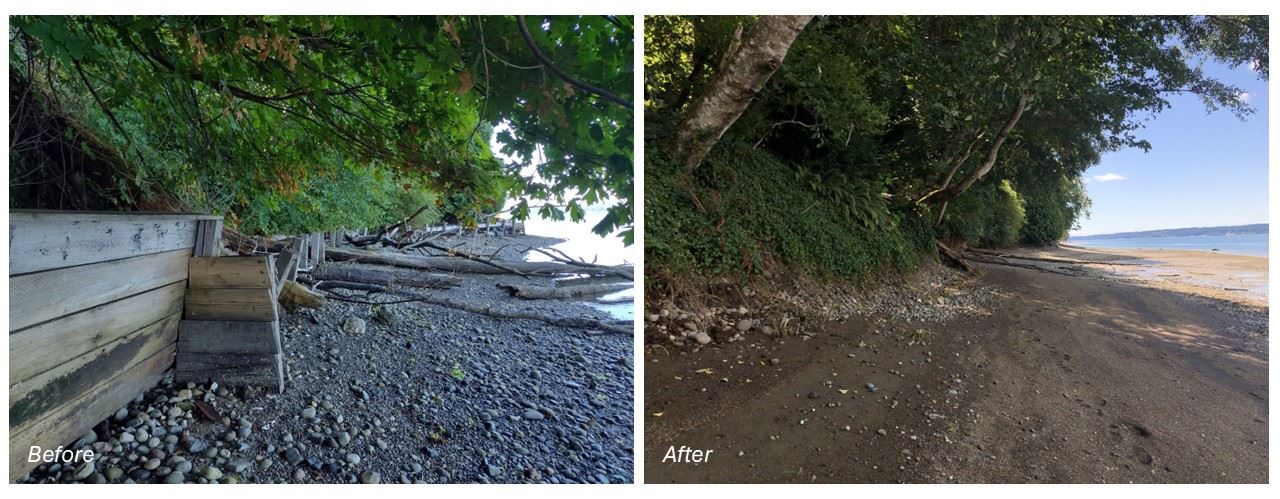
The natural shoreline and beach after a wall removal.
It is time to celebrate the removal of 750 feet of shoreline armor from the shore of Puget Sound! Pierce Conservation District (PCD) completed the Henderson Bay Shoreline Restoration project in August 2025, the culmination of years of planning and partnership through the Shore Friendly program. This project restored a natural shoreline to benefit forage fish, salmonids, eel grass, and the broader nearshore ecosystem in Puget Sound.
According to a 2019 report by the Puget Sound Partnership, over 29% of the Puget Sound shoreline is armored, disrupting processes that build and maintain beaches and threatening the health of the nearshore. The nearshore provides vital spawning and foraging habitat for forage fish. These forage fish play a key role in the marine food web by feeding salmonids, including threatened Puget Sound Chinook. In turn, these salmon are a crucial food source for the endangered Southern Resident orcas.
Recognizing that reduction of armor on the Puget Sound is a regional priority, many agencies have implemented projects to remove armor and restore shorelines, particularly on public properties. However, most of the shoreline of Puget Sound is privately owned. Over 1,400 miles of shoreline (or 57%) is in residential ownership. As such, private landowners must be part of the conversation on restoring shorelines of the Puget Sound. Understanding this, the Washington Department of Fish and Wildlife and others initiated the Shore Friendly program to engage waterfront residents in shoreline recovery. Through technical assistance and outreach, Shore Friendly assists residents in managing their shorelines in a natural state or restoring them to a more natural condition.
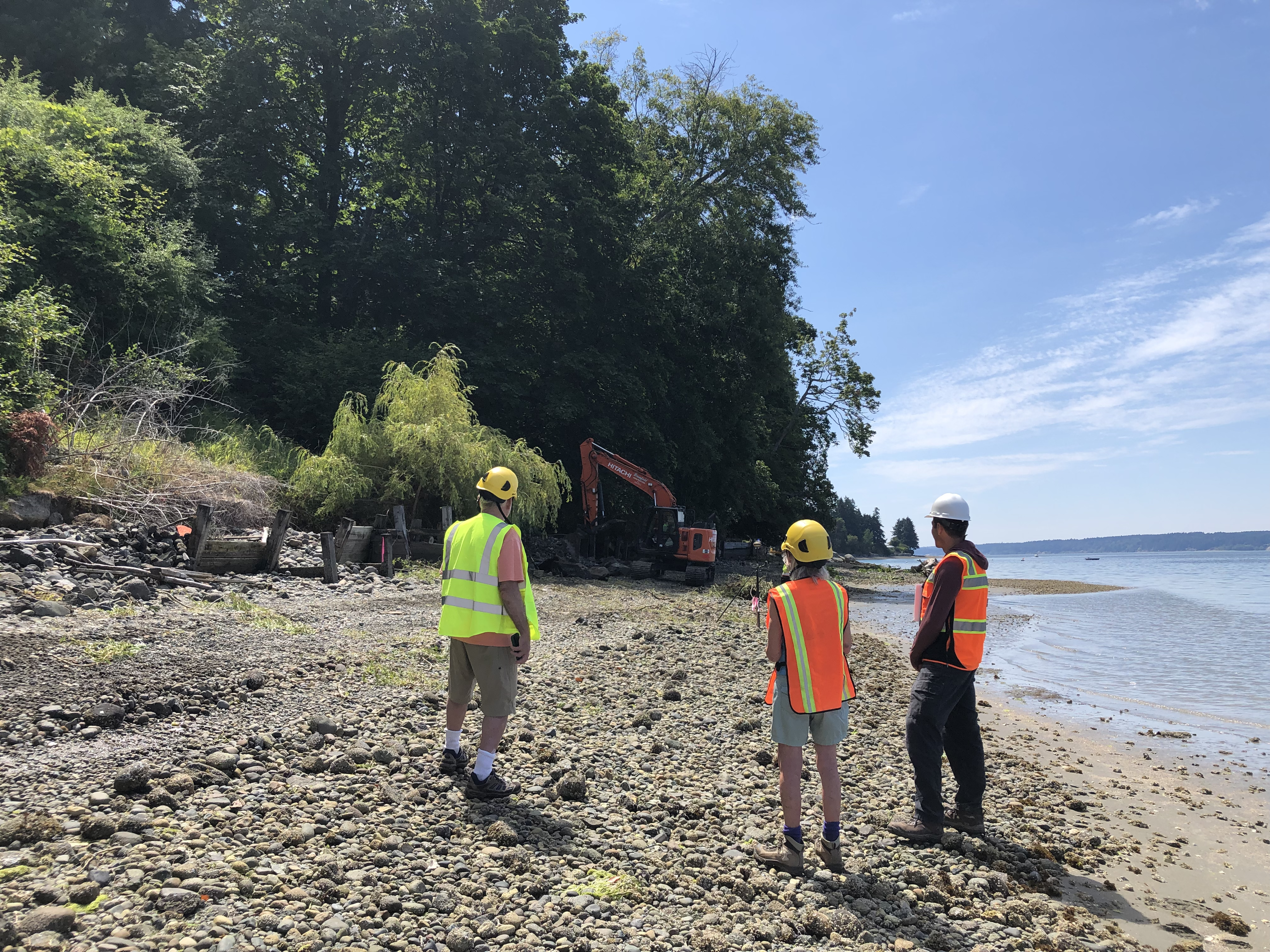
Excavators hard at work at Henderson Bay.
The Henderson Bay Shoreline Restoration project site is a large residential property that is unique for its size and its history of family ownership. The property was “homesteaded” in the late 19th century by a German immigrant and then sold in the early part of the 20th to the Boyles family, who still own it today. The nearly twelve acres of forestland and three acres of tidelands were protected by a conservation easement initiated by Vella Boyles, and completed by her children, Pam and James Boyles, in 2003. The current landowners, Pam Boyles and Rocky Johnson, are active supporters of Great Peninsula Conservancy (GPC), who holds the conservation easement. Shortly after the Shore Friendly Pierce program was initiated at PCD, staff at GPC referred Pam and Rocky to the program. They received technical assistance site visits under Shore Friendly before enthusiastically agreeing to partner with PCD on the shoreline restoration project.
The opportunity to work directly with private landowners to remove shoreline armor and restore such a large stretch of shoreline – over 750 linear feet – is a rare one. The existing conservation easement on this property will prevent further development at the project site. The landowners are committed to allowing the complete reconnection of the nearshore forest, including falling trees and erosion of the bank without intervention. As sea levels rise, the shoreline on this property will be allowed to migrate landward and continue to provide upper beach habitat with marine riparian shade for use by forage fish as nearby armored beaches may be lost to coastal squeeze.
The project is receiving a mix of local, state, and federal funding. We are using non-traditional sources, such as our local Flood Control Zone District, to bridge funding gaps between more conventional grants. PCD accessed fee-based programs such as the WA DOE Oil Spills Grant Program, which directs funds collected from oil spill penalties to restoration. We also received more conventional habitat improvement funding through the Coastal Watersheds Grant Program, under which our project qualifies as enhancing eelgrass habitat, and through the Pacific Marine Fish Habitat Partnership in recognition of the project’s benefits to fish habitat. From floods, to eelgrass, to fish, funding priorities intersect to move this nearshore restoration forward.
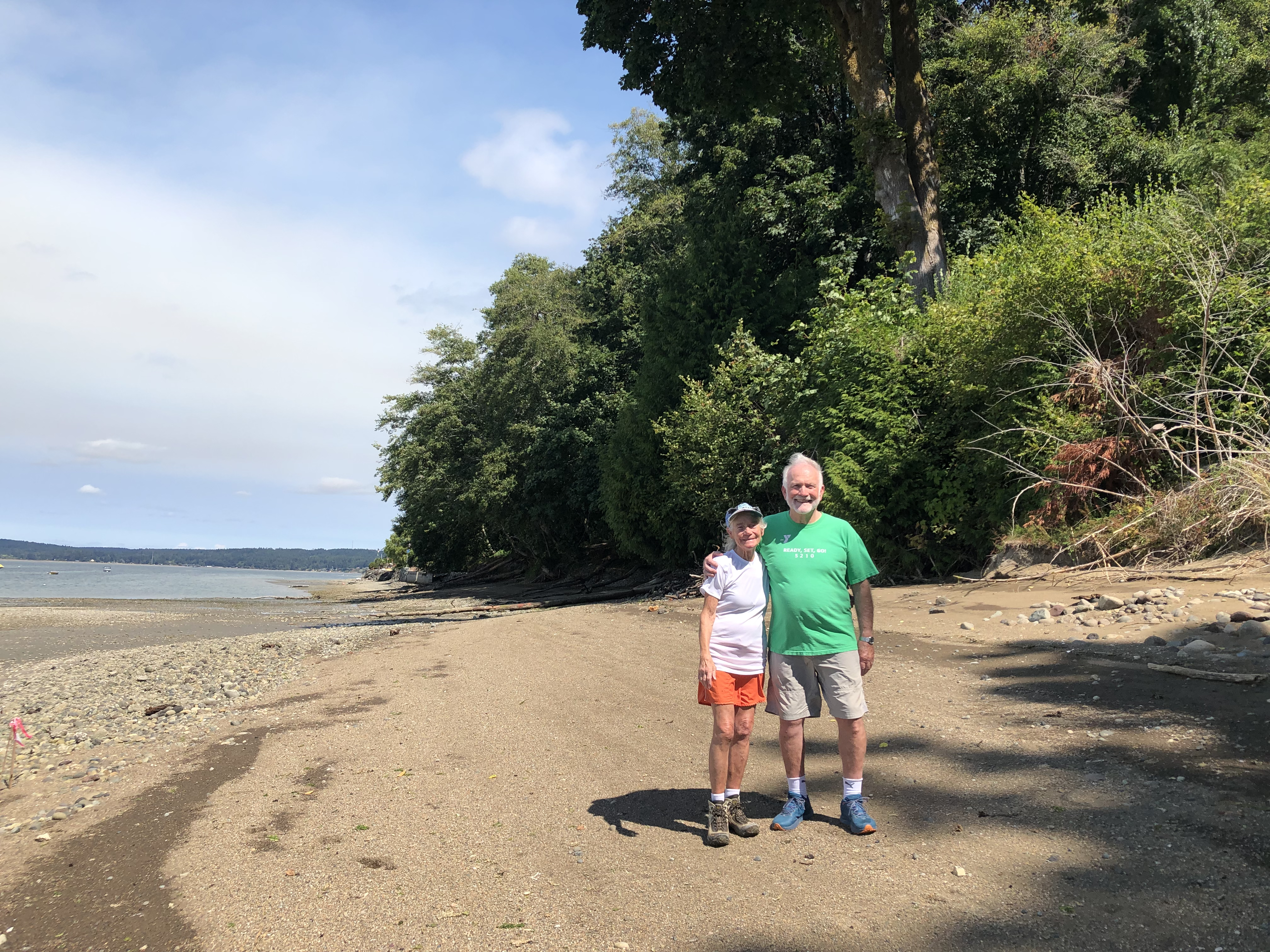
Landowners, Pam B. and Roger J., proudly showing off their restored beach.
Now that removal of the armor is complete, PCD will continue working with the landowners to further restore and enhance the marine riparian zone at the property by removing invasive plants and installing appropriate shoreline forest vegetation. This restored riparian zone will provide shade, water filtration, and organic inputs to the beach that are critical for fish like smelt and salmonids in the nearshore.
This project is a tells the story of engaging private landowners in restoration through social marketing, capitalizing on partnerships, and leveraging strategic funding to restore high-priority nearshore fish habitat through process-based restoration.
"This project has been funded wholly or in part by the United States Environmental Protection Agency under cooperative agreement 83967501 to Restore America’s Estuaries. The contents of this document do not necessarily reflect the views and policies of the Environmental Protection Agency, nor does the EPA endorse trade names or recommend the use of commercial products mentioned in this document. For more information, please see https://estuaries.org/initiatives/watershedgrants/.”