by Jack Hulgan
This fall marked the beginning of a salmon life cycle adventure for third grades in the White River School District. In the first phase of the program, students explored South Prairie Creek Preserve, where they saw pink salmon digging redds creating a safe place for their offspring to develop. Thanks to the biennial life cycle of pink salmon, 2025 was a great year to see the pinks swimming upstream to lay their eggs. Students observed the habitat surrounding the creek and pondered how these areas shape the beginning and end of the salmon life cycle. Slow currents, fallen trees, shade, gravel perfect for digging, and cool, oxygenated water were a few of the conditions the students noticed were important to a salmon looking for a spot to dig a redd.
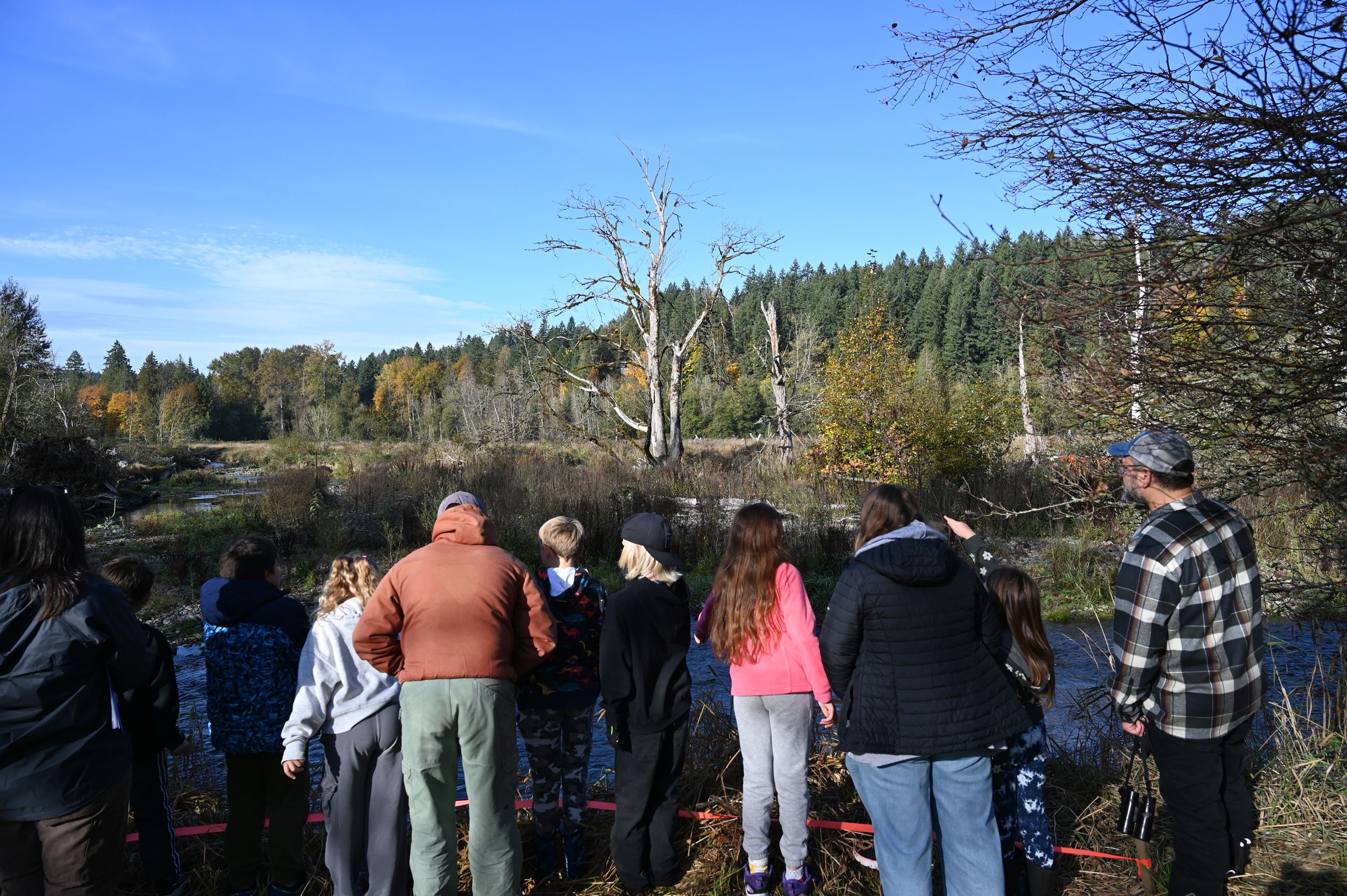
Students observing salmon swimming upstream.
Once observations were complete students got their hands dirty maintaining healthy salmon habitat through tree-planting. Third graders planted native shrubs and trees, empowering them to improve the habitat of these indicator species. Years from now, students can reflect on their adventure at the preserve, knowing their stewardship is helping generations of salmon that arose from ones observed at the creek.
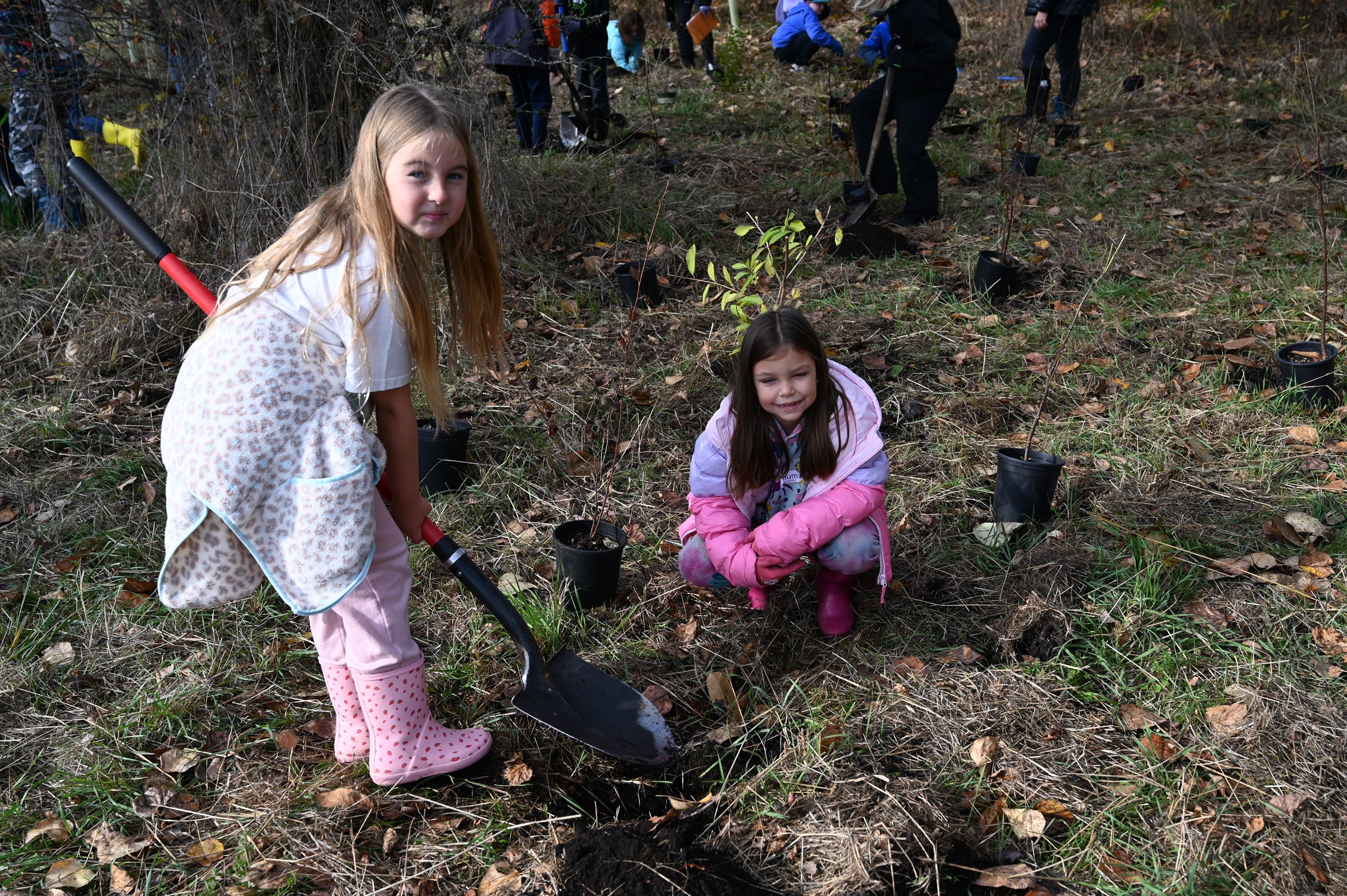
Students installing native plant species near South Prairie Creek.
The second phase of the experiential program started in winter. Coho salmon eggs from Voights Hatchery were delivered to four elementary schools in the White River School District, where over 300 students will care for these eggs in freshwater tanks. Students will experience three stages in the salmon’s life cycle as eggs hatch into alevin and transform into fry. In spring, third grades will release their fry into their local salmon-bearing streams and learn more about habitat, reinforcing a theme of empowerment through stewardship.
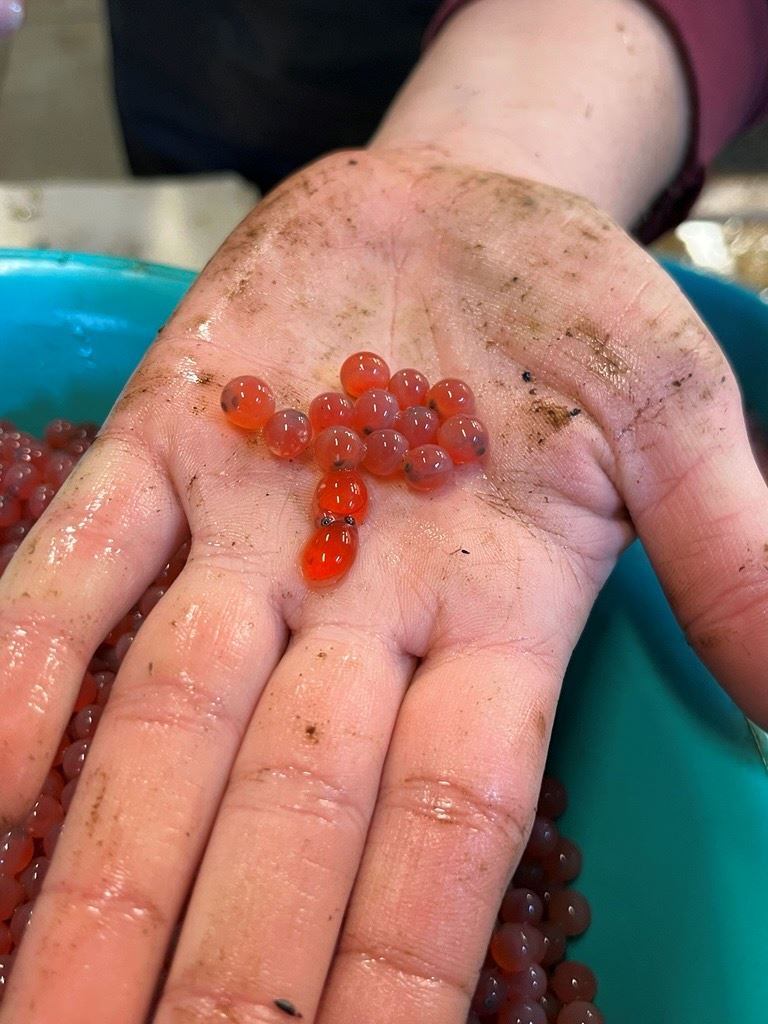
Coho salmon eggs before they were sent to White River School District schools.
Outside of White River School District, Pierce Conservation District is partnering with the Foss Waterway Seaport and Tacoma Public School District for the annual Tacoma Salmon in the Schools program. This project (separate from the program at White River) reaches 28 schools and an estimated 1,800 students. Students will raise chum salmon eggs beginning in January, and like White River School District, they will release the salmon once they reach the fry phase.
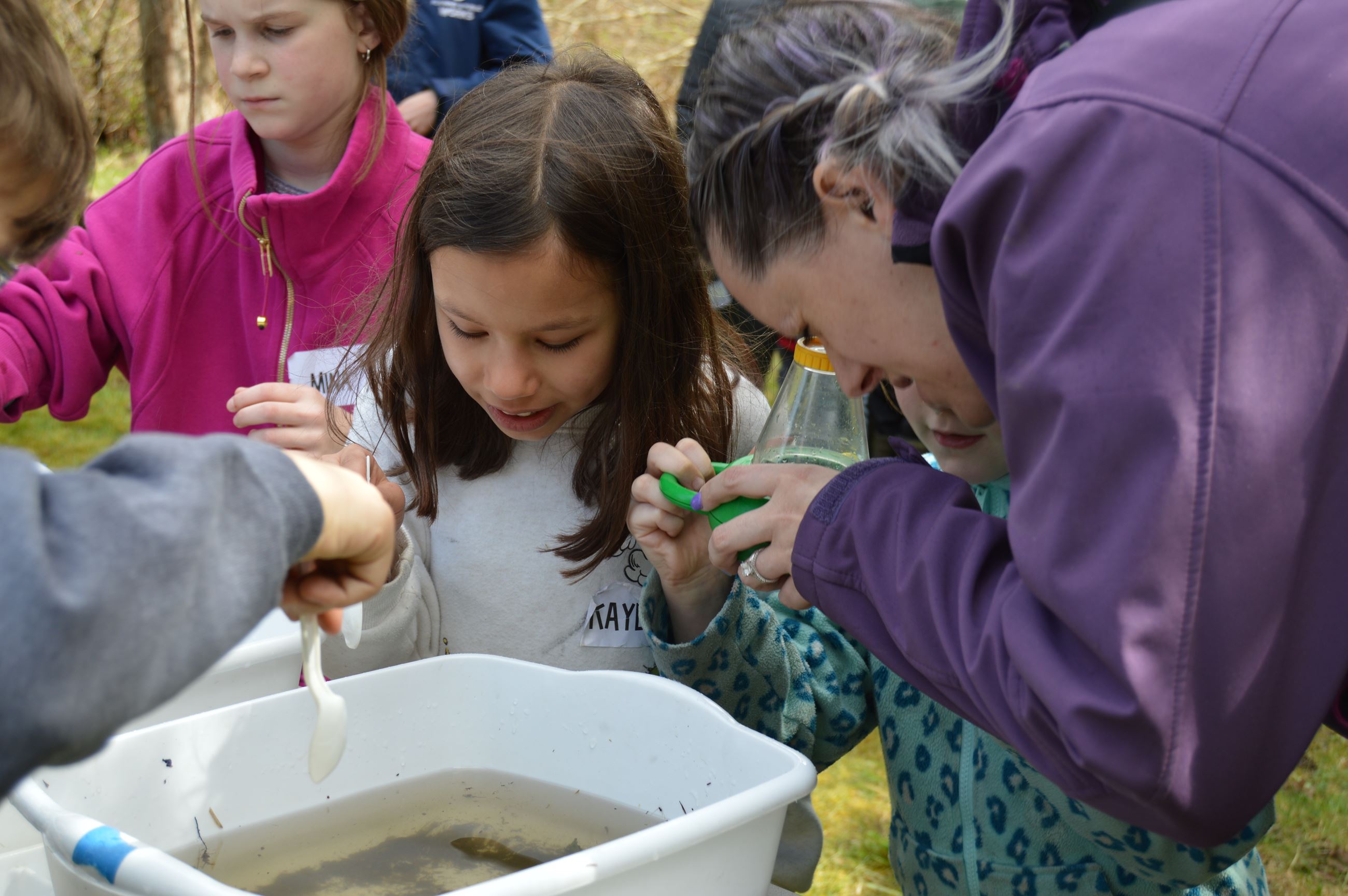
Students hunt for macroinvertebrates collected from the creek as part of their spring outdoor experience.
Programs like these are integral, teaching students the positive effect they can have on their environment and future. Salmon are such an important resource to the people of the Pacific Northwest, and they are an excellent indicator species for the hard work salmon stewards like these students put into restoring habitats around them.
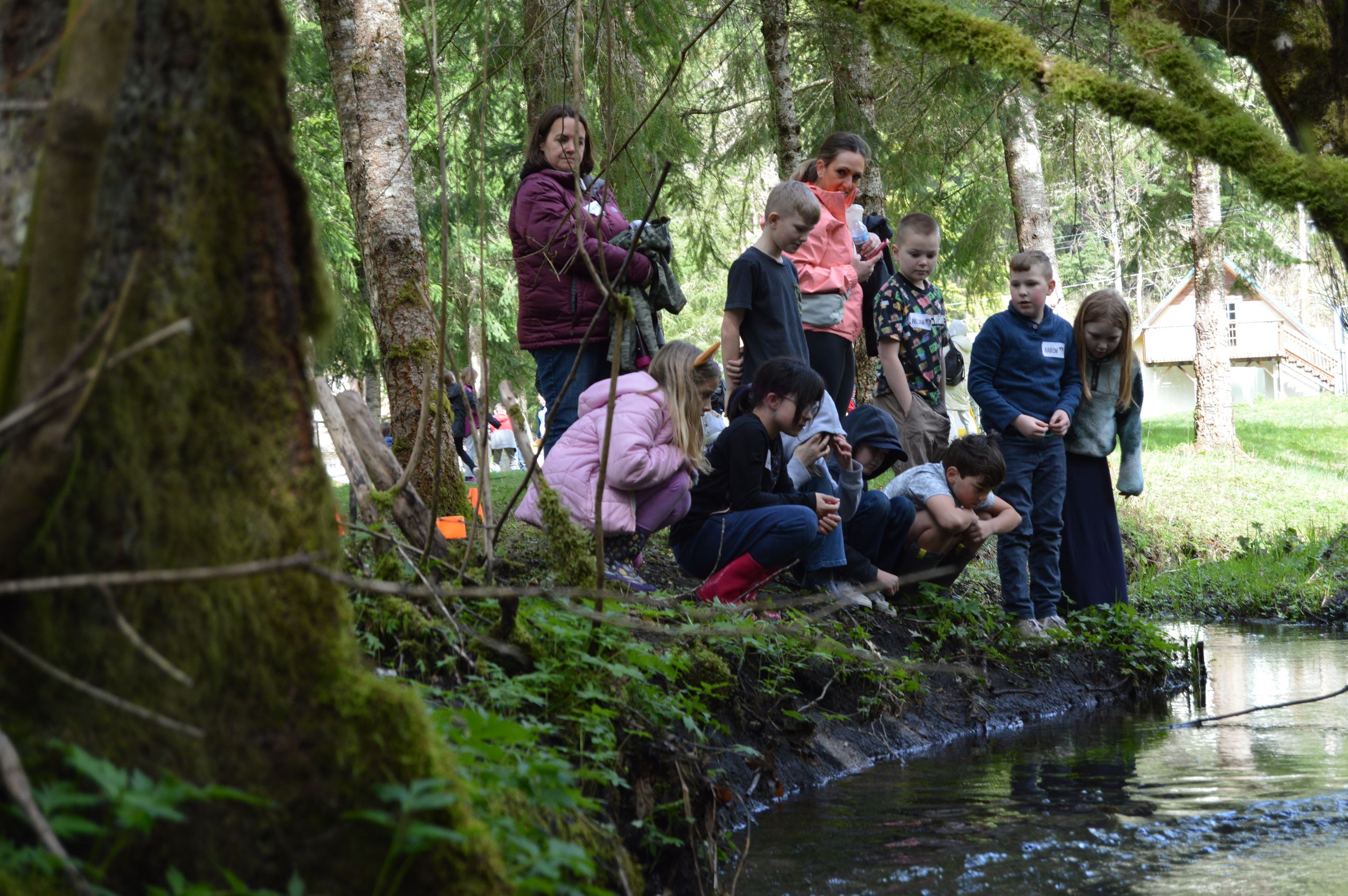
Goodbye fry, and good luck on your way to the ocean!
Pierce Conservation District would like to extend a huge thank-you to our environmental educator volunteers, school staff, and partners for another great year of education and stewardship. Programs like these are only made possible with the people dedicated to keeping the next generation passionate about conservation efforts.
Learn more about becoming an education volunteer through Pierce Conservation District’s Environmental Educator Volunteer Program.
Education Volunteer Program | Pierce Conservation District, WA
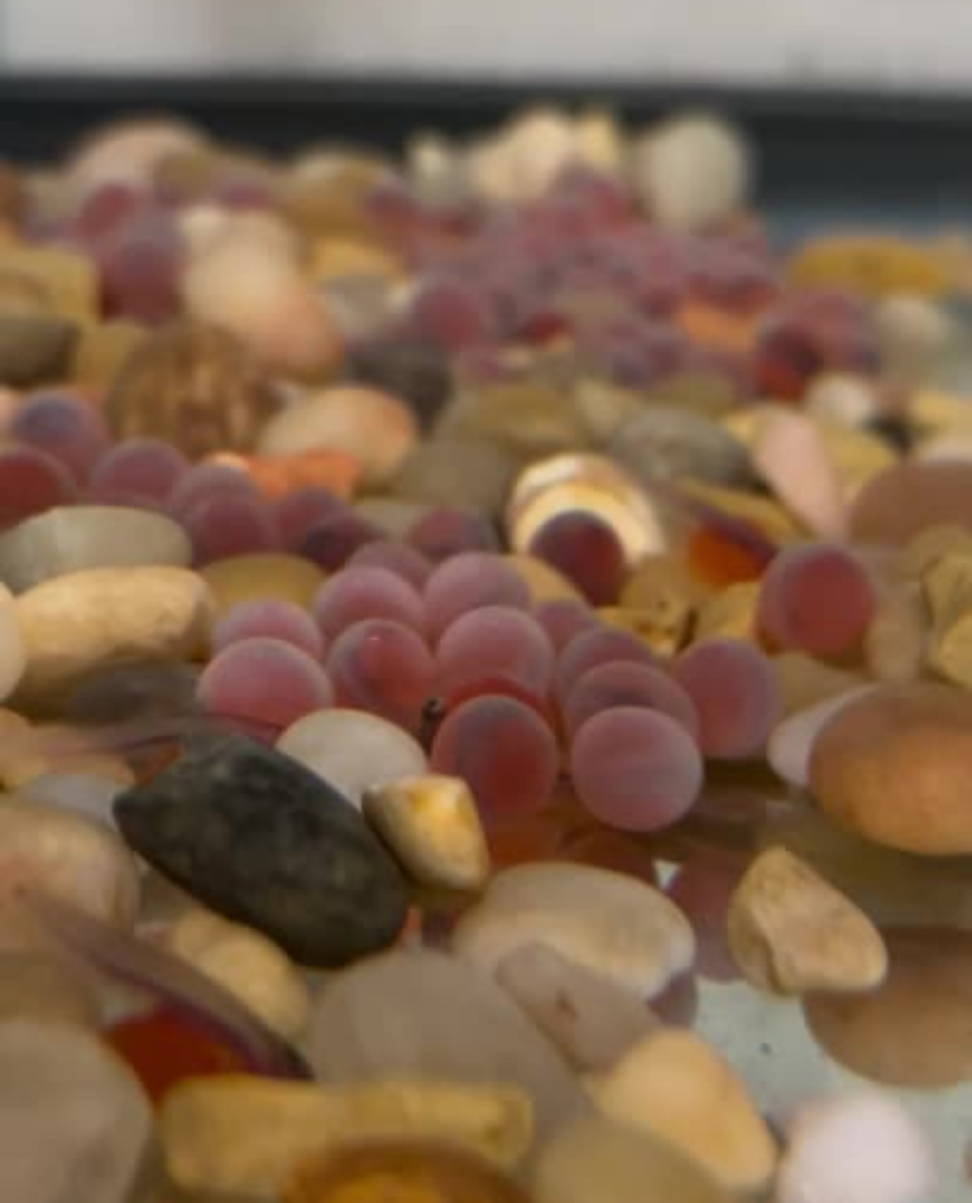
Alevin that recently hatched at Pierce Conservation District’s office tank.